In manufacturing, the biggest innovations are often the ones that solve problems industries had quietly accepted for years. They do not always arrive with headlines or dramatic announcements. Instead, they transform operations by improving reliability, reducing losses, and setting new standards that eventually become part of everyday industrial practice.
That is exactly what happened in 1995 when Rubberised Board was introduced as a protective packaging solution for the aluminum industry. The development of Rubberised Board for Aluminum Packaging created a new benchmark in industrial protection and helped establish more dependable Aluminum Packaging Protection Solutions for manufacturers operating at scale.
At a time when aluminum manufacturers were struggling with surface damage, handling losses, transit-related rejections, and inefficient protective packaging methods, the industry needed a material that could offer both cushioning and structural stability. Existing packaging solutions were inconsistent, short-lived, and often failed to provide reliable protection during transportation and storage. The introduction of Rubberised Board changed that equation.
What began as a practical innovation to solve a persistent packaging challenge soon became a preferred protective material across aluminum packaging operations. By improving surface protection, reducing product damage, and enhancing handling efficiency, Rubberised Board for Aluminum Packaging helped manufacturers rethink how aluminum products should be packaged and protected.
Over the years, its impact extended beyond a single product category. It influenced packaging practices, operational standards, and industrial expectations across the aluminum packaging ecosystem.
At Chetak Industries, this innovation was never about creating just another packaging material. It was about engineering a solution that addressed a real industrial problem at scale and delivered measurable value where it mattered most. As a trusted Protective Packaging Materials Manufacturer, the company focused on solving long-standing industrial challenges through material innovation and practical engineering.
1. The Aluminum Packaging Industry Before 1995
Before the introduction of Rubberised Board, aluminum packaging manufacturers faced a recurring challenge that affected production quality, logistics efficiency, and customer satisfaction.
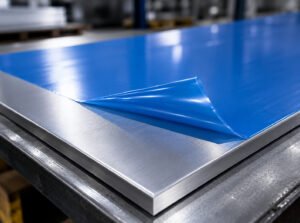
Aluminum products, especially foils, sheets, coils, lids, and laminated packaging materials, are highly vulnerable during handling and transportation. Even small amounts of pressure, friction, or impact could leave scratches, dents, edge damage, or surface abrasions. These defects were not merely cosmetic. In many industries, including pharmaceuticals and food packaging, damaged aluminum materials could affect sealing performance, product presentation, and usability.
The problem became more severe as manufacturing volumes increased. Aluminum products often passed through multiple handling stages involving stacking, warehousing, loading, unloading, and long-distance transportation. Conventional protective materials available at the time struggled to withstand these industrial conditions consistently.
Rigid separators lacked cushioning and increased friction-related damage. Softer protective materials compressed too quickly under weight and lost their protective effectiveness during transit. Manufacturers were forced to use multiple layers of packaging materials, increasing packaging complexity and operational costs without fully solving the problem.
Transit damage and product rejection became accepted operational risks across the industry. The market needed more dependable Aluminum Packaging Protection Solutions designed specifically for the realities of aluminum packaging.
2. The Development of Rubberised Board
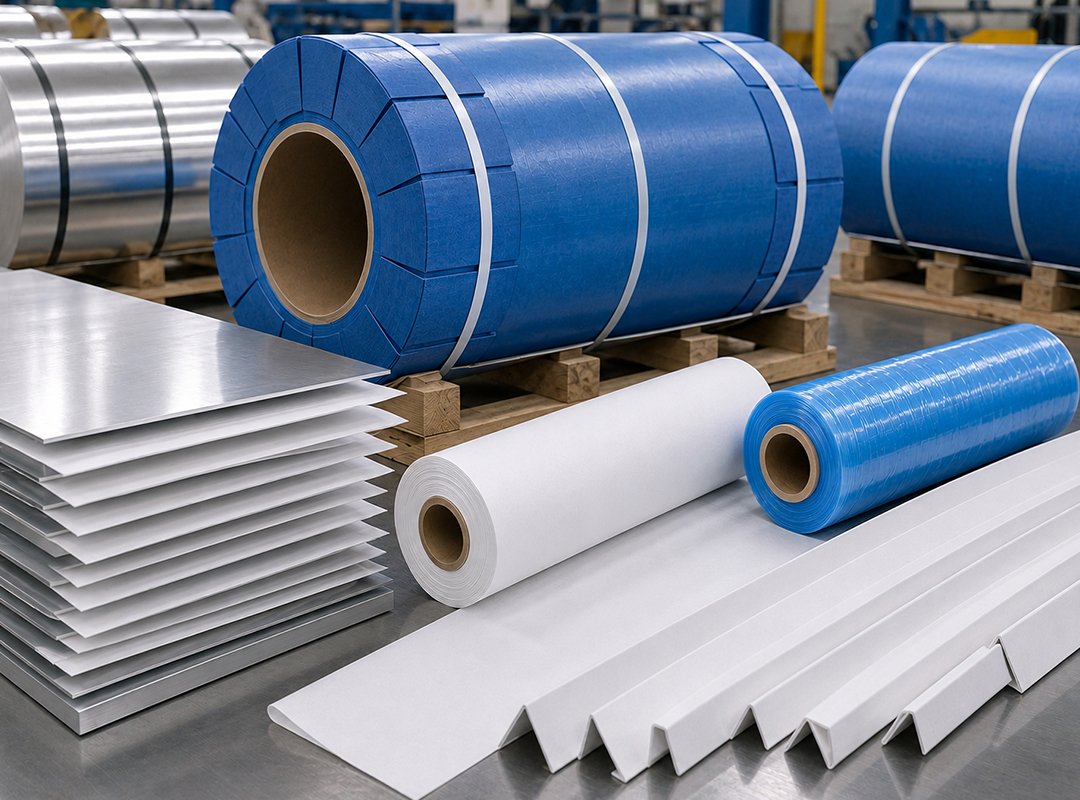
The development of Rubberised Board in 1995 introduced a new approach to protective packaging. Instead of choosing between flexibility and strength, the material was engineered to provide both. It combined cushioning properties with structural stability, allowing aluminum products to remain protected even under demanding transportation and storage conditions.
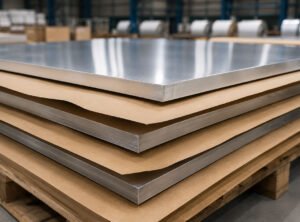
The innovation addressed several packaging weaknesses simultaneously. It reduced direct surface contact between aluminum products, absorbed shocks during movement, minimized pressure marks during stacking, and lowered the risk of abrasion-related damage.
What made Rubberised Board for Aluminum Packaging different was its ability to maintain performance consistency during industrial use. Unlike conventional materials that lost effectiveness under load or repeated handling, Rubberised Board retained its protective characteristics over extended operational cycles.
This reliability quickly made it valuable for manufacturers dealing with high-volume packaging operations where even minor damage percentages could translate into substantial financial losses.
The invention was not just about material improvement. It was about creating Aluminum Packaging Protection Solutions that matched the operational realities of modern aluminum manufacturing.
3. How Rubberised Board Changed the Industry
The impact of Rubberised Board became visible because it solved problems that manufacturers had struggled with for years. One of the most significant changes was the reduction in transit-related damage. Aluminum manufacturers could now transport products with greater confidence, knowing the protective layer could absorb handling stress more effectively than traditional materials. This directly reduced product rejection rates and minimized material wastage across supply chains.
The innovation also improved surface quality preservation. Aluminum packaging products often require clean and uniform finishes, especially in industries where visual appearance and precision matter. Rubberised Board helped maintain these standards by reducing scratches and friction marks during storage and movement.
Operational efficiency improved as well. Since the material combined cushioning and support in one solution, manufacturers no longer needed to rely on excessive layering or multiple protective materials. Packaging processes became more streamlined, faster, and more cost-effective.
The benefits extended beyond transportation. Warehousing practices also improved because products could be stacked and stored more securely without increasing the risk of pressure-related damage.
Over time, Rubberised Board for Aluminum Packaging became associated with dependable packaging protection in aluminum manufacturing environments. Its adoption reflected a broader shift in the industry toward specialized protective materials engineered for specific industrial applications rather than generic packaging substitutes.
4. Raising Expectations for Protective Packaging
Before innovations like Rubberised Board, packaging was often viewed primarily as a logistical necessity. Its purpose was limited to basic containment and transportation. The introduction of advanced protective materials helped change that perception.
Manufacturers began recognizing packaging as a critical contributor to product quality assurance. The focus shifted from simply moving products safely to preserving product condition throughout the entire supply chain.
Rubberised Board played an important role in this transition because it demonstrated that protective packaging could directly influence operational efficiency, customer satisfaction, and cost control.
As aluminum packaging industries expanded globally, the expectations around protective packaging also increased. Manufacturers handling export shipments, long-distance transportation, and high-volume storage operations required materials capable of delivering consistent performance under demanding conditions.
The success of Aluminum Packaging Protection Solutions like Rubberised Board reinforced the idea that engineered packaging solutions could provide measurable industrial advantages rather than serving as temporary protective layers.
This mindset eventually contributed to broader improvements in packaging material development across industrial manufacturing sectors.
5. Reducing Losses and Improving Manufacturing Confidence
In industrial manufacturing, even small percentages of product damage can create major operational consequences. Rejected materials, customer complaints, replacement shipments, delayed deliveries, and quality control failures all increase costs and reduce operational efficiency. One of the most important contributions of Rubberised Board was its role in reducing these avoidable losses.
By improving cushioning performance and minimizing handling damage, the material helped manufacturers maintain better product consistency throughout the packaging and transportation cycle. This translated into improved manufacturing confidence because businesses could rely more heavily on their packaging systems to preserve product quality.
The reduction in damage-related uncertainty also supported stronger relationships between manufacturers, distributors, and end users. Reliable packaging protection improved delivery consistency and reduced disputes related to transit damage.
In industries where quality assurance standards are strict, dependable Aluminum Packaging Protection Solutions became a competitive advantage rather than a secondary operational consideration.
Rubberised Board helped establish that advantage at a time when the aluminum industry needed more reliable packaging infrastructure.
6. Influencing Modern Packaging Practices
The influence of Rubberised Board extended beyond its immediate commercial success. It contributed to a larger industry movement toward application-specific packaging materials designed around real operational challenges.
Today, protective packaging is no longer treated as a generic support function. Industries increasingly demand customized materials capable of handling specific product vulnerabilities, transportation conditions, and storage requirements.
This evolution reflects principles that innovations like Rubberised Board for Aluminum Packaging helped reinforce decades earlier.
Modern packaging strategies now focus heavily on impact resistance, surface preservation, material compatibility, durability, and logistics efficiency. These priorities are standard expectations today, but in the mid-1990s, they were still developing concepts in many industrial sectors.
The introduction of Rubberised Board demonstrated that packaging materials could actively improve industrial performance rather than simply provide passive protection.
That shift in thinking remains one of the innovation’s most important long-term contributions.
7. The Continuing Relevance of Rubberised Board
Many industrial materials lose relevance as technologies evolve, but Rubberised Board continues to remain valuable because the challenges it addressed still exist today.
Aluminum products remain sensitive to handling pressure, friction, and transit impact. Modern supply chains are often even more demanding due to larger shipment volumes, faster movement cycles, export logistics, and complex storage systems.
Protective packaging materials must therefore perform reliably under increasingly challenging industrial conditions.
The continued use and relevance of Rubberised Board for Aluminum Packaging reflects the strength of its original design philosophy: practical protection built around real manufacturing requirements.
Its durability, cushioning capability, and operational reliability continue to make it a dependable solution for industries where surface quality and damage prevention remain critical priorities.
Very few packaging innovations maintain industrial relevance for decades. Rubberised Board achieved that because it solved a core operational problem in a practical and scalable way.
8. Chetak Industries and a Legacy of Industrial Innovation
At Chetak Industries, innovation has always been driven by functionality, industry understanding, and long-term value creation. The invention of Rubberised Board in 1995 reflected a commitment to solving practical manufacturing challenges rather than following short-term market trends. By identifying a major gap in aluminum packaging protection and developing a material specifically engineered to address it, the company helped create meaningful operational improvements across the industry.
As a leading Protective Packaging Materials Manufacturer, Chetak Industries focused on building industrial solutions capable of supporting long-term packaging reliability and operational efficiency.
That legacy continues today through a focus on dependable packaging materials designed to meet evolving industrial demands.
As manufacturing industries continue to grow more quality-conscious and logistics-driven, the role of protective packaging becomes even more important. Companies increasingly require Aluminum Packaging Protection Solutions capable of supporting efficiency, consistency, and product integrity throughout the supply chain.
The story of Rubberised Board is therefore not just a story about a material invention. It is a story about how thoughtful industrial innovation can reshape operational standards, improve manufacturing reliability, and create lasting impact across an entire industry.
The aluminum packaging industry of the early 1990s faced persistent challenges related to product protection, handling damage, and packaging inefficiencies. Rubberised Board changed that landscape by introducing a more reliable and performance-driven protective solution.
Its impact was measurable. Manufacturers experienced reduced damage, improved handling confidence, better surface preservation, and more efficient packaging operations. More importantly, the innovation helped shift industry expectations regarding the role of protective packaging in manufacturing quality control.
Decades later, Rubberised Board for Aluminum Packaging continues to stand as an example of how practical engineering and industry-focused thinking can create long-term industrial transformation.
At Chetak Industries, this legacy remains a reflection of a simple but powerful principle: the most meaningful innovations are the ones that solve real problems and continue delivering value long after they are introduced. As a trusted Protective Packaging Materials Manufacturer, the company continues to support industries with reliable and performance-driven Aluminum Packaging Protection Solutions for evolving manufacturing environments.