Aluminium has become one of the most widely used engineering materials because of its high strength-to-weight ratio, corrosion resistance, conductivity, and recyclability. According to the International Aluminium Institute (IAI), global primary aluminium production exceeded 70 million tonnes in 2024, reflecting growing demand from industries such as automotive, construction, aerospace, electrical equipment, renewable energy, and consumer goods. As aluminium applications continue to expand, manufacturers are focusing not only on production quality but also on preserving that quality throughout storage, handling, and transportation.
Although aluminium naturally forms a protective oxide layer, it remains vulnerable to scratches, dents, edge deformation, abrasion, and moisture staining during logistics. These defects can reduce the value of premium products such as anodized sheets, painted coils, architectural profiles, and precision-finished components. Selecting the right Industrial Packaging for Aluminium Products is therefore essential for minimizing product damage, reducing logistics costs, and maintaining customer satisfaction.
Choosing the right Aluminium Packaging Materials requires more than simply selecting protective products. Manufacturers should evaluate the product type, surface finish, transportation conditions, storage duration, and export requirements before deciding on a packaging solution. The following sections explain how different packaging materials should be evaluated and why their technical specifications play an important role in protecting aluminium products.
1. Understand the Aluminium Product and Surface Finish Before Choosing Packaging
Every aluminium product has different packaging requirements. Heavy billets and castings mainly require structural protection against impact, while sheets, coils, foils, and architectural profiles demand protection against surface damage. Likewise, anodized, powder-coated, painted, brushed, and mirror-finished aluminium surfaces are significantly more sensitive than mill-finished products because even fine scratches or stains can result in rejection. Before selecting packaging materials, manufacturers should assess the product dimensions, weight, finish, handling frequency, transportation mode, and storage conditions. This evaluation helps determine the level of cushioning, moisture resistance, edge protection, and surface protection required, ensuring packaging is both technically appropriate and cost-effective.
2. Choose Acid-Free Interleaving Paper for Long-Term Surface Protection
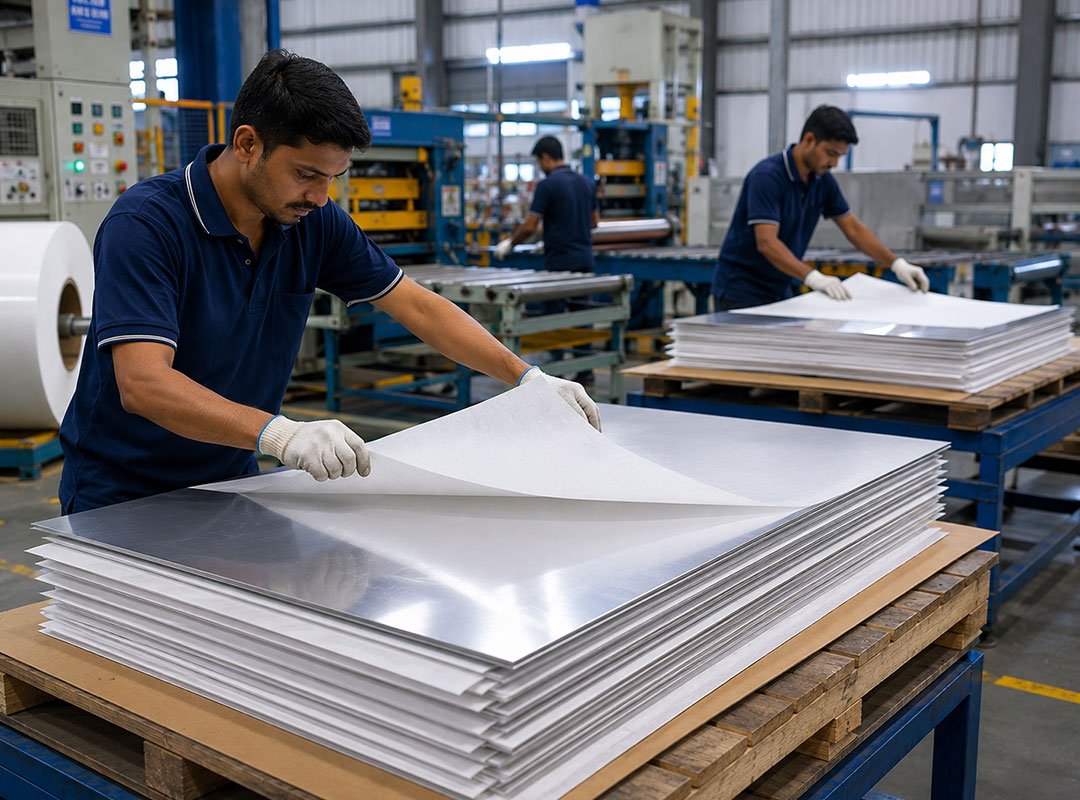
Interleaving Paper is one of the most critical Aluminium Packaging Materials because it prevents direct contact between stacked aluminium sheets, coils, and plates. However, not all interleaving papers provide the same level of protection. Manufacturers should evaluate factors such as acid-free composition, pulp quality, ash content, moisture content, tear strength, and GSM before selecting a paper. Low-quality papers manufactured from recycled fibres may contain acidic impurities or contaminants that can transfer onto aluminium surfaces, increasing the risk of staining and oxidation during storage.
Chetak Industries manufactures acid-free Interleaving Paper using 100% virgin pulp, ensuring the paper remains chemically stable when in contact with aluminium. Its low ash content minimizes particulate contamination, while controlled moisture levels help reduce moisture transfer between the paper and the metal surface. The paper is available in customized GSMs, widths, and roll or sheet formats, allowing manufacturers to select specifications based on product thickness and handling requirements. These characteristics make it suitable for protecting aluminium sheets, coils, foils, and finished products during both domestic transportation and export shipments.
3. Moisture Protection Depends on the Right Barrier Materials, Not Just Wrapping
Many manufacturers assume aluminium does not require moisture protection because it naturally resists corrosion. In reality, prolonged exposure to humidity can cause oxidation marks, white rust, and water staining that affect the appearance of finished products. The risk becomes much higher during export shipments where shipping containers experience continuous temperature fluctuations. Industry observations indicate that humidity inside ocean containers can exceed 90% relative humidity, creating favourable conditions for condensation.
When selecting moisture-resistant packaging, manufacturers should evaluate the barrier properties of wrapping materials, their resistance to water vapour transmission, and compatibility with long-term storage. Simply wrapping products with standard kraft paper or plastic film often provides inadequate protection in humid environments. Moisture-resistant papers, laminated barrier materials, and sealed packaging systems offer significantly better protection against environmental exposure. For export-oriented businesses, combining moisture-resistant packaging with high-quality interleaving paper provides an additional safeguard against condensation-related surface damage.
4. Evaluate Compression Strength Before Selecting Paper Angle Boards and OD Protectors
The edges of aluminium sheets and coils experience the highest mechanical stress during strapping, palletization, forklift handling, and transportation. Without proper reinforcement, these areas are prone to crushing, bending, and deformation that can affect downstream processing. When selecting edge protection, manufacturers should evaluate compression strength, dimensional accuracy, moisture resistance, and compatibility with load weight rather than considering thickness alone.
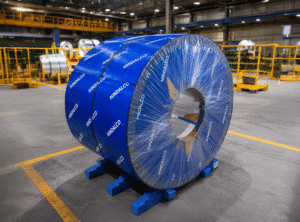
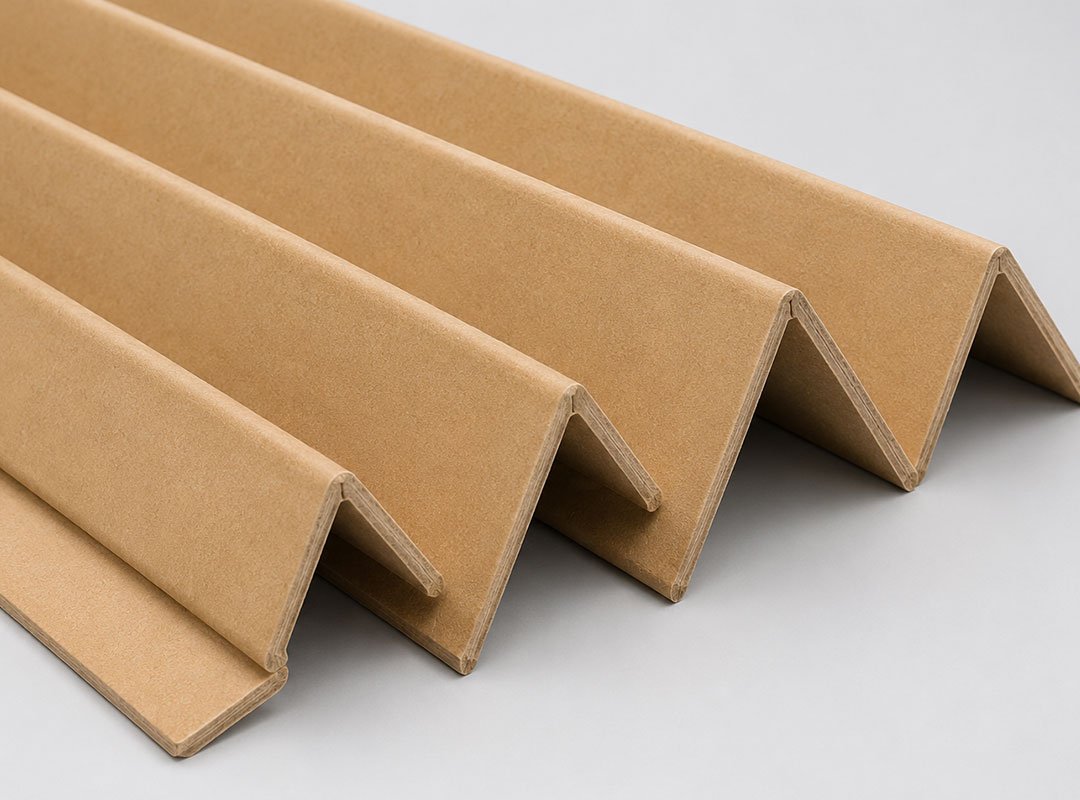
Paper Angle Boards manufactured by Chetak Industries are produced using multiple layers of high-strength kraft paper that provide excellent compression resistance while improving pallet stability. They distribute strapping pressure evenly across the load, preventing edge damage without increasing packaging weight. Similarly, OD Protectors form an important part of Aluminium Coil Packaging Solutions by protecting the outer diameter of coils from impact and deformation during storage and transportation. Available in multiple sizes and customized specifications, these products improve stacking performance and help maintain coil geometry throughout the logistics cycle.
5. Select Cushioning Materials Based on Transit Conditions
Transportation exposes aluminium products to vibration, shocks, and repeated impacts that vary depending on whether goods travel by road, rail, or sea. Selecting cushioning materials should therefore be based on transport conditions rather than product weight alone. The objective is to absorb mechanical forces while preventing movement inside the package.
PP Bubble Guard Sheets provide excellent impact resistance, high compression strength, and durability, making them suitable for protecting heavy industrial products. Unlike conventional cushioning materials, they retain their structural integrity under repeated handling and can often be reused. Air Bubble Films provide lightweight cushioning that absorbs minor impacts and prevents scratches during handling, stacking, and transportation. Combining both materials creates a balanced cushioning system that protects aluminium products without adding excessive packaging weight or increasing freight costs.
6. Surface Protection Films Should Be Selected According to the Aluminium Finish
Temporary surface protection films are often the final layer of defence before aluminium products reach customers. However, selecting the wrong film can create new problems, including adhesive residue, poor adhesion, or damage during film removal. Manufacturers should therefore evaluate adhesive grade, film thickness, UV resistance, and compatibility with specific aluminium finishes before choosing a protection film.
Chetak Industries’ Surface Protection Films are designed to provide consistent adhesion throughout manufacturing, storage, transportation, and installation while allowing clean removal without leaving residue on the surface. They are suitable for anodized, powder-coated, painted, brushed, and mirror-finished aluminium products where maintaining appearance is essential. By protecting against scratches, dust, fingerprints, and handling marks, these films help preserve the original finish until the product is ready for installation or end use.
7. Paper Surface Boards Must Balance Strength with Sustainability
Heavy aluminium sheets, plates, and fabricated components require packaging materials capable of distributing stacking pressure without damaging product surfaces. When selecting Paper Surface Boards, manufacturers should evaluate bursting strength, tensile strength, flexibility, and load-bearing capacity instead of considering board thickness alone.
Chetak Industries manufactures Paper Surface Boards (Rubberised Boards) using a carefully engineered combination of virgin kraft paper cuttings, virgin white paper cuttings, bamboo fibre, resin, and strengthening additives. This construction provides high bursting strength, excellent flexibility, and uniform load distribution, reducing the risk of dents during stacking and transportation. Since the boards are paper-based, they also support sustainable packaging initiatives while delivering the mechanical performance required for heavy industrial applications.
8. Integrated and Customized Industrial Packaging Solutions Deliver Better Protection
No single packaging material can protect aluminium products against every transit and storage risk. Effective Industrial Packaging for Aluminium Products requires an integrated system where each packaging component performs a specific function. Interleaving Paper prevents surface contact, Surface Protection Films preserve finished surfaces, Paper Angle Boards and OD Protectors reinforce edges, Paper Surface Boards distribute compressive loads, while PP Bubble Guard Sheets and Air Bubble Films absorb shocks during handling and transportation. Instead of relying on standard packaging, manufacturers should evaluate the product dimensions, handling frequency, transport mode, storage duration, and customer specifications before designing a packaging solution. Chetak Industries offers customized packaging solutions by combining these materials according to the product and logistics requirements, helping manufacturers achieve maximum protection without increasing packaging costs.
9. Sustainable Aluminium Packaging Materials Should Not Compromise Performance
As industries move towards sustainable manufacturing, packaging materials are expected to deliver environmental benefits alongside mechanical performance. Since aluminium is 100% recyclable without losing its original properties, manufacturers increasingly seek Aluminium Packaging Materials that support circular economy initiatives. However, sustainability should never come at the expense of product protection. Materials such as Paper Surface Boards, Paper Angle Boards, and Interleaving Paper manufactured from responsibly sourced virgin fibres offer both recyclability and high mechanical strength. Unlike low-grade recycled papers that may contain contaminants affecting aluminium surfaces, high-quality virgin fibre products provide better consistency, cleaner surfaces, and superior durability. Selecting sustainable packaging should therefore involve evaluating recyclability, material strength, product compatibility, and overall lifecycle performance rather than environmental claims alone.
10. Evaluate Packaging Based on Total Cost of Ownership, Not Purchase Price
One of the most common mistakes in industrial packaging is selecting materials based solely on their purchase price. While packaging generally accounts for only a small percentage of the delivered product cost, inadequate protection can result in damaged goods, rejected shipments, warranty claims, production delays, and increased logistics expenses. A more practical approach is to evaluate packaging using the Total Cost of Ownership (TCO). This includes product protection, material utilization, warehouse efficiency, labour requirements, transportation performance, and damage reduction. Investing in technically superior packaging materials often lowers long-term operational costs by preventing expensive product losses and improving supply chain reliability. For high-value aluminium products, the cost of inadequate packaging is often far greater than the initial savings from choosing lower-priced materials.
11. Aluminium Coil Packaging Solutions Must Meet Export Requirements
Export shipments place significantly greater demands on packaging than domestic transportation. Aluminium coils may remain inside shipping containers for several weeks while being exposed to high humidity, fluctuating temperatures, repeated handling, and extended storage at ports. These conditions increase the risk of condensation, edge damage, surface staining, and deformation. Reliable Aluminium Coil Packaging Solutions therefore require multiple protective layers rather than a single packaging material. A typical export packaging system includes acid-free Interleaving Paper to prevent surface contact, moisture-resistant barrier materials to control humidity, Surface Protection Films for finished surfaces, OD Protectors for coil edges, Paper Angle Boards for load reinforcement, and PP Bubble Guard Sheets or Air Bubble Films for cushioning. This integrated approach significantly reduces the likelihood of transit damage while helping manufacturers meet international customer quality standards.
12. Choose a Packaging Partner with Technical Expertise
Selecting the right packaging supplier is just as important as selecting the right packaging material. A technically experienced manufacturer understands how aluminium products behave during storage, handling, and transportation and can recommend packaging based on engineering requirements rather than standard specifications. Factors such as product weight, coil dimensions, surface finish, export destination, storage duration, and handling methods should all influence packaging design. Chetak Industries works closely with aluminium manufacturers to develop customized industrial packaging solutions instead of supplying individual products in isolation. This technical approach ensures that every packaging component contributes to improving product protection, operational efficiency, and overall packaging performance.
Selecting the right Industrial Packaging for Aluminium Products requires more than choosing protective materials. It involves understanding the aluminium product, identifying transportation and storage risks, evaluating technical specifications, and combining packaging materials into a complete protective system. Whether the objective is preventing surface scratches, protecting coil edges, resisting moisture, or improving pallet stability, every packaging component should be selected based on its ability to perform under actual operating conditions.
At Chetak Industries, every packaging solution is developed with the objective of delivering reliable protection for aluminium products across domestic and international supply chains. By combining technically engineered products with application-specific packaging solutions, the company helps manufacturers reduce transit damage, improve handling efficiency, and extend product protection from the production floor to the customer’s facility. Investing in the right packaging is not simply about preventing damage; it is about protecting product value, improving operational efficiency, and strengthening long-term customer confidence.