In modern steel and aluminium manufacturing, surface protection has become as important as production quality itself. Companies like Chetak Industries, which specialize in industrial protective packaging solutions, play a critical role in helping manufacturers prevent surface damage, corrosion, oxidation, moisture stains, and handling defects during storage and transportation.
A stainless steel coil worth thousands can lose its commercial value because of microscopic scratches, friction marks, moisture exposure, or oxidation during handling and export movement. In industries where surface finish directly affects product acceptance, packaging failure quickly becomes a production and financial loss.
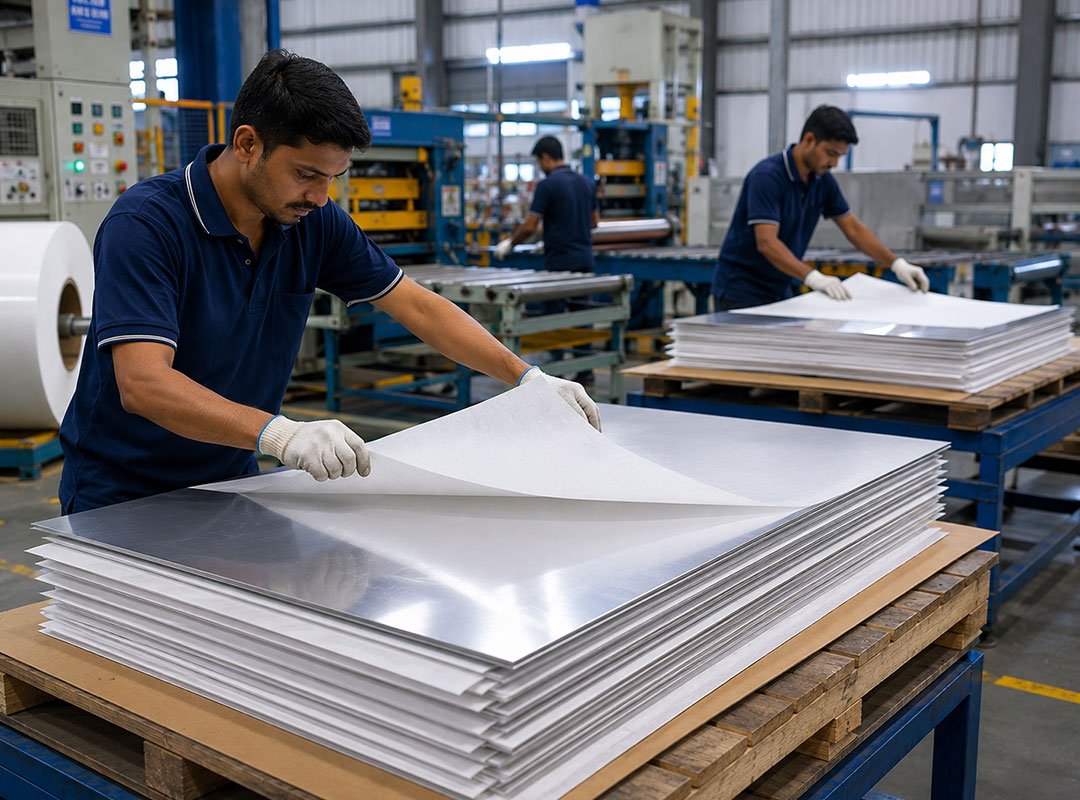
This is why Acid-Free Interleaving Paper has become a critical part of modern metal packaging systems. Used between layers of steel and aluminium sheets, coils, strips, and precision-finished components, acid-free interleaving paper prevents direct metal-to-metal contact, reduces abrasion, controls moisture exposure, and minimises corrosion risk during storage and transportation.
Unlike conventional separator paper, acid-free interleaving paper is manufactured under controlled pH conditions using 100% virgin pulp and engineered processing methods. High-quality industrial interleaving paper is also designed with low ash content and elemental chlorine-free processing to maintain clean and chemically stable surface protection for sensitive metal applications.
Today, steel and aluminium manufacturers no longer treat interleaving paper as ordinary packaging material. It is considered an essential part of surface protection and quality control.
1. Why Ordinary Packaging Paper Damages Steel and Aluminium Surfaces
Conventional kraft paper often contains residual acids, lignin, chloride traces, sulphate content, ash particles, and unstable chemical compounds that can react with metal surfaces over time. Under humid conditions or fluctuating temperatures, these impurities accelerate oxidation, discoloration, staining, and surface corrosion.
This becomes especially risky for:
- Cold rolled steel
- Stainless steel
- Mirror-finish aluminium
- Coated coils
- Anodized aluminium
- Electrical-grade aluminium
- Pharmaceutical foil stock
Low-grade paper also lacks uniform density and controlled absorbency. Instead of protecting the surface, it can trap moisture and create localized corrosion points, stains, and surface marks.
Acid-free interleaving paper is designed specifically to eliminate these risks. Its controlled pH balance, sulphate-free and ash-free composition, elemental chlorine-free processing, low contamination levels, consistent GSM, and controlled moisture content of 6-9% make it suitable for direct contact with precision-finished metal products. It helps ensure corrosion-free packaging performance while preventing stains or surface marks during storage and transportation.
For manufacturers dealing with high-value surfaces, chemical neutrality is not optional. It is essential.
2. Surface Damage Creates Larger Commercial Losses Than Most Manufacturers Expect
Many manufacturers calculate production costs carefully but underestimate packaging-related losses. A damaged surface does not only affect appearance. It can trigger operational and commercial consequences across the supply chain, including:
- Material rejection during inspection
- Downgrading of premium-grade products
- Re-polishing and reprocessing costs
- Delays in OEM production schedules
- Export claims and shipment disputes
- Loss of customer confidence
In stainless steel applications, even minor abrasions generated during transit can make material unsuitable for decorative or appliance-grade use. Similarly, aluminium sheets used in automotive panels, electronics, or coated applications require flawless surfaces because downstream fabrication processes often magnify visible defects.
Acid-free interleaving paper acts as a preventive protection layer that helps manufacturers reduce these avoidable losses before they occur while maintaining clean, stain-free surface quality.
3. The Technical Properties That Make Interleaving Paper Effective
The performance of interleaving paper depends on far more than thickness alone. Several technical parameters determine whether the paper can reliably protect sensitive metal surfaces during industrial handling and transportation.
4. Controlled pH Stability
One of the most critical requirements is chemical neutrality. Acidic paper can trigger electrochemical reactions when exposed to humidity and metal surfaces for extended durations. Acid-free interleaving paper maintains stable pH characteristics that help reduce oxidation, staining, corrosion, and surface discoloration risks.
5. Uniform GSM Distribution
Consistent GSM ensures equal cushioning and pressure distribution across metal surfaces. Uneven paper density can create pressure marks during stacking, rewinding, and coil compression. Uniform GSM improves packaging stability and helps maintain finish consistency during storage and export handling.
6. High Tensile Strength
Industrial metal packaging environments involve continuous mechanical stress during slitting, recoiling, rewinding, and transportation. High-strength interleaving paper resists tearing during automated handling operations and maintains dimensional stability even in high-speed processing environments.
7. Controlled Absorbency and Moisture Level
Protective paper must absorb limited moisture without retaining excessive humidity near the metal surface. Premium interleaving paper is manufactured with controlled moisture levels between 6-9%, helping reduce condensation-related corrosion risks, particularly in coastal regions and export shipments exposed to changing climatic conditions.
8. Surface Cleanliness
Dust particles, loose fibers, ash residue, and impurities present in low-grade paper can leave contamination marks or impressions on polished metal surfaces. Premium interleaving paper manufactured from 100% virgin pulp under controlled conditions maintains high cleanliness standards suitable for sensitive industrial applications. Its ash-free and elemental chlorine-free properties further help prevent stains, marks, and chemical contamination on finished metal surfaces.
9. Why Aluminium Manufacturers Depend Heavily on Interleaving Paper
Aluminium surfaces are comparatively softer and more vulnerable to handling damage than many other industrial metals.
High-finish aluminium products can easily develop:
- Friction scratches
- Roller marks
- Pressure impressions
- Moisture stains
- Handling abrasions
- Oxidation patches
This becomes especially critical in sectors such as:
- Automotive body sheets
- Beverage can stock
- Electrical conductors
- Consumer electronics
- Solar panel components
- Pharmaceutical packaging
- Architectural cladding
Even microscopic defects can affect anodizing quality, coating adhesion, reflectivity, and visual appearance.
Interleaving paper creates a chemically stable and corrosion-free barrier that protects aluminium surfaces during slitting, stacking, storage, and transportation. It also reduces friction during coil unwinding and sheet separation in downstream processing operations while helping maintain stain-free and mark-free surface quality.
For export-oriented aluminium manufacturers, reliable interleaving protection becomes even more important because products may remain exposed to varying humidity conditions for extended transit periods.
10. Why Stainless Steel Manufacturers Require Specialized Surface Protection
Although stainless steel offers strong corrosion resistance, its finished surfaces remain highly vulnerable to visible scratching and abrasion.
Industries such as Kitchen equipment, Elevators, Appliances, Decorative panels, and architectural products require flawless visual finishes with minimal surface variation. Many stainless steel products also undergo specialized processing such as Mirror polishing, Hairline finishing, BA finishing, No.4 surface treatment, and PVC coating. These finishes increase sensitivity to friction and handling damage during storage and movement.
Interleaving paper helps prevent direct contact between processed surfaces and preserves finish consistency throughout dispatch and transportation cycles. High-quality acid-free paper also helps ensure no stains, no marks, and corrosion-free protection during long storage and export movement.
For exporters handling decorative-grade stainless steel, surface protection becomes especially critical because minor visible defects can lead to rejection in international markets.
11. Why Export Shipments Create Higher Corrosion Risk
Export logistics expose metal products to harsher environmental conditions compared to domestic transportation.
During long transit cycles, metal products may remain inside containers for weeks while exposed to:
- Temperature fluctuations
- High humidity
- Coastal air exposure
- Container condensation
- Continuous vibration
Under these conditions, low-grade separator paper often absorbs moisture and accelerates surface staining or oxidation.
Acid-free interleaving paper engineered with controlled moisture levels, elemental chlorine-free processing, and chemically stable virgin pulp composition helps maintain corrosion-free performance across long shipping durations and changing environmental conditions. This reduces moisture-related damage, stains, export claims, and cargo rejection risks.
For companies supplying international markets, packaging quality directly influences customer satisfaction and shipment reliability.
12. Interleaving Paper Also Improves Manufacturing Efficiency
The role of interleaving paper extends beyond surface protection alone.
In high-volume manufacturing facilities, it also supports smoother operational handling by:
- Improving coil unwinding
- Reducing sheet sticking
- Increasing sheet separation speed
- Minimizing handling-related defects
- Supporting automated packaging systems
Poor-quality separator paper frequently tears during processing, creating downtime, contamination issues, and operational inefficiencies.
High-strength interleaving paper helps reduce interruptions during high-speed production and automated handling operations while improving stacking stability in industrial packaging systems.
13. Why Customization Matters in Industrial Packaging
Different metal products require different interleaving specifications.
Paper selection depends on factors such as:
- Metal type
- Surface finish sensitivity
- Coil weight
- Sheet thickness
- Storage duration
- Export requirements
- Humidity exposure
- Processing methods
A generic packaging approach cannot provide consistent protection across all industrial applications.
Manufacturers increasingly require customized interleaving solutions with application-specific GSM, tensile strength, absorbency, width, pH characteristics, and moisture-control properties designed for their processing environments.
This level of customization requires packaging manufacturers to understand not only paper production, but also the operational realities of steel and aluminium processing industries.
14. Why Chetak Industries Is Trusted by Steel and Aluminium Manufacturers
Because surface protection depends heavily on paper chemistry, GSM consistency, tensile strength, and moisture control, manufacturers increasingly prefer specialized industrial packaging suppliers over generic paper vendors.
Chetak Industries has established itself as a manufacturer focused on engineered packaging materials for demanding steel and aluminium applications.
The company manufactures acid-free interleaving paper with:
- Controlled pH properties
- Uniform GSM consistency
- High tensile strength
- Reliable moisture-control characteristics
- Moisture content maintained between 6-9%
- Sulphate-free and ash-free composition
- Elemental chlorine-free processing
- 100% virgin pulp
- Clean surface-contact performance
- Corrosion-free protection
- No stains or surface marks
Its customized solutions are designed for:
- Aluminium coils and sheets
- Stainless steel products
- CR and HR steel
- Foil applications
- Precision-finished metal surfaces
- Export-grade packaging systems
By focusing on process consistency and application-specific packaging performance, Chetak Industries helps manufacturers reduce surface defects, improve packaging reliability, and maintain premium product quality throughout the supply chain.
In modern steel and aluminium manufacturing, packaging is no longer a secondary operation. It is an extension of quality control.
Acid-free interleaving paper plays a critical role in protecting metal surfaces against corrosion, abrasion, pressure damage, oxidation, and handling defects during storage and transportation. Its technical properties directly influence product quality, rejection rates, export reliability, and customer satisfaction.
As manufacturers continue moving toward higher surface-finish standards and stricter quality expectations, the demand for engineered protective packaging solutions will continue to grow.
For companies focused on delivering defect-free metal products consistently, high-performance interleaving paper has become an essential component of advanced industrial packaging systems.