In metal manufacturing, quality is measured not when a product leaves the factory but when it reaches the customer. Manufacturers invest heavily in precision machining, automation, quality inspections, and advanced production processes to ensure every aluminium sheet, steel coil, fabricated component, or engineered part meets strict specifications. However, even defect-free products can be rejected if they develop scratches, edge deformation, corrosion, pressure marks, or handling damage during storage and transportation.
The financial impact of such rejections is significant. According to the Association for Materials Protection and Performance (AMPP), corrosion costs the global economy approximately US$2.5 trillion annually, accounting for nearly 3.4% of global GDP. Similarly, the American Society for Quality (ASQ) estimates that the Cost of Poor Quality (COPQ) can account for 15% to 20% of annual sales in manufacturing organizations. A considerable share of these losses can be reduced through well-engineered packaging that protects products after production.
The challenge has become greater as supply chains have expanded. Metal products often pass through multiple warehouses, ports, distribution centres, and transport modes before reaching their destination. According to the World Shipping Council, more than 90% of global trade by volume is transported by sea, exposing products to humidity, vibration, compression, repeated handling, and long storage periods. Packaging is therefore no longer just a protective covering but a critical industrial packaging solution that preserves product quality throughout the supply chain. As demand for reliable industrial packaging solutions continues to grow across the metal industry, manufacturers are increasingly treating packaging as an extension of their quality management systems rather than a logistics function.
1. Packaging Is the Final Quality Control Process
Manufacturing quality does not end with final inspection. Products must remain free from damage until they are received and processed by the customer. A perfectly manufactured aluminium sheet or steel coil loses its value if scratches, dents, corrosion, or deformation develop during transit. This is why leading manufacturers treat packaging as an extension of their quality management systems rather than a dispatch activity. Standardized packaging specifications, proper handling practices, and application-specific protective materials help ensure products reach customers in the same condition in which they were dispatched, reducing avoidable quality claims, improving delivery performance, and strengthening customer confidence.
2. Surface and Edge Protection Prevent the Majority of Transit-Related Rejections
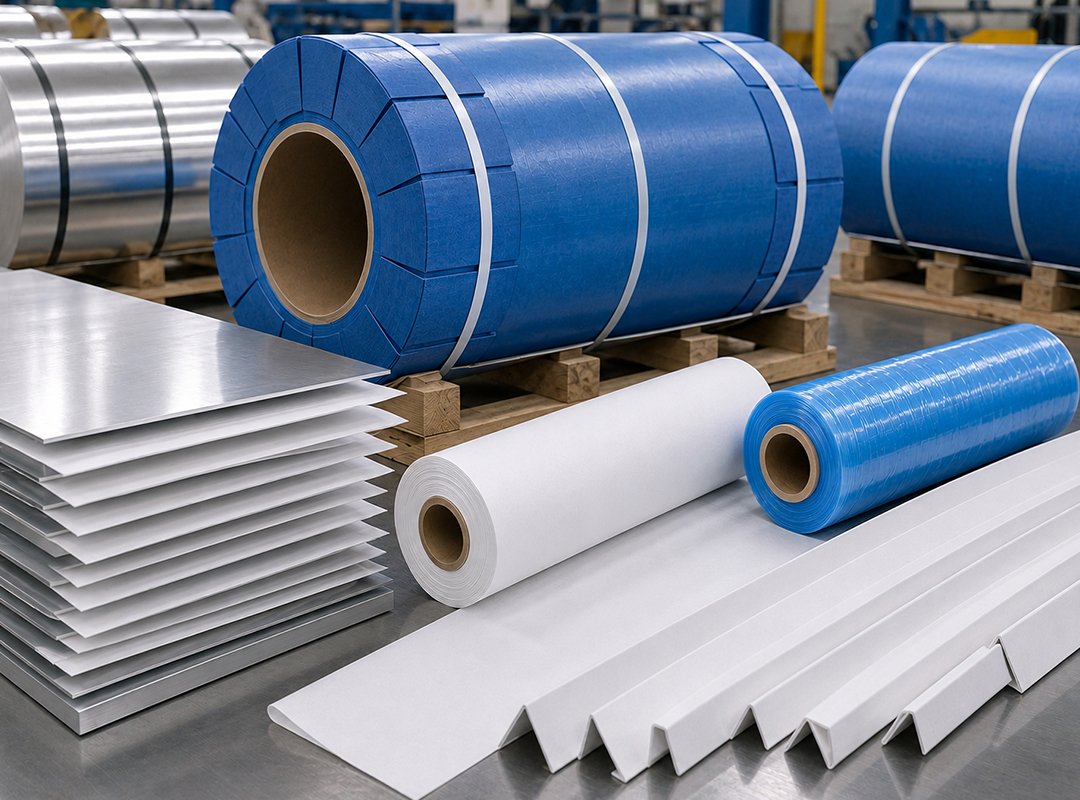
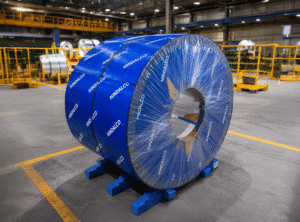
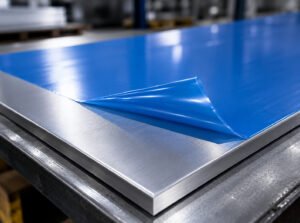
Surface defects remain one of the most common reasons for product rejection in industries such as automotive, electrical equipment, construction, and heavy engineering. Even minor scratches, abrasion marks, pressure impressions, or damaged edges can interrupt downstream processes such as stamping, laser cutting, anodizing, painting, or fabrication. These defects typically occur because of metal-to-metal contact, improper stacking, or impact during handling. Protective packaging for metal products plays a crucial role in preventing these failures. Materials such as Interleaving Paper, Rubberised Paper Surface Boards, and PP Bubble Guard Sheets create separation between metal surfaces, minimizing friction, preventing abrasion, and preserving the original surface finish throughout transportation. Similarly, Angle Boards and OD Protectors reinforce vulnerable edges of steel coils and aluminium products by distributing impact forces more evenly during loading, unloading, stacking, and transportation.
3. Vibration, Compression, and Moisture Are the Biggest Transit Risks
Transit damage is not always caused by accidental impacts. Continuous vibration during road transportation gradually creates friction between adjacent products, leading to surface scratches, coating damage, and unwanted product movement within the package. At the same time, excessive stacking loads can deform coils, bend sheets, or leave permanent pressure marks if packaging lacks adequate compression strength. Moisture further increases the risk, especially during export shipments where temperature fluctuations inside containers create condensation, commonly known as container rain. Logistics studies indicate that humidity inside shipping containers can exceed 90% during long ocean voyages, accelerating corrosion and staining. Packaging systems that combine load stability, product separation, and appropriate protective materials significantly reduce these transit-related risks while preserving product integrity.
4. Effective Packaging Begins with Understanding the Product
Effective packaging for metal manufacturing should be designed around the engineering characteristics of the product rather than its dimensions alone. Factors such as weight, centre of gravity, surface finish, edge sensitivity, handling frequency, transportation distance, stacking requirements, and storage duration all influence packaging performance. For example, a mirror-finished aluminium sheet requires protection against microscopic abrasion, whereas a heavy steel coil requires reinforced edge protection capable of withstanding substantial vertical loads. Customized packaging developed according to these operating conditions minimizes product rejection while optimizing material usage by providing protection exactly where it is needed.
5. Export Packaging Requires Greater Protection Than Domestic Shipments
Export consignments remain in transit for longer periods and pass through significantly more handling stages than domestic shipments. Products may be transferred between trucks, warehouses, ports, shipping containers, customs facilities, and distribution centres before reaching the customer. Each stage introduces additional risks such as impact damage, stacking pressure, moisture exposure, and improper handling. Packaging for export applications therefore requires higher levels of protection to maintain product quality throughout extended logistics cycles. Combining Angle Boards & OD Protectors, Interleaving Paper, Rubberised Paper Surface Boards, and other application-specific protective materials helps manufacturers reduce transit-related damage while ensuring aluminium and steel products arrive ready for immediate processing.
6. Packaging Testing Identifies Weaknesses Before Products Reach Customers
Engineered packaging should be validated before commercial use to ensure it can withstand real transportation and storage conditions. International standards such as ASTM D4169 for transportation testing, ASTM D5276 for drop testing, ISO 2234 for compression testing, and ISTA performance protocols help manufacturers evaluate packaging against vibration, impact, stacking pressure, and handling stresses. These tests identify design weaknesses before shipments enter the supply chain, allowing manufacturers to optimize packaging and minimize transit damage. By validating industrial packaging solutions through recognized testing standards, manufacturers can improve delivery reliability, reduce product rejections, and increase customer confidence.
7. Product Rejections Cost More Than Better Packaging
Packaging is often evaluated based on procurement cost rather than its impact on overall business performance. However, the true cost of a rejected shipment extends well beyond replacing the damaged product. It includes reverse logistics, re-inspection, expedited production, emergency freight, customer complaint resolution, production downtime, and potential loss of future business. A single rejected steel coil or aluminium sheet can interrupt a customer’s production schedule and affect multiple downstream operations. According to the American Society for Quality (ASQ), the Cost of Poor Quality (COPQ) can account for 15% to 20% of annual sales. Investing in engineered packaging is therefore a preventive quality measure that helps manufacturers reduce avoidable losses while improving operational efficiency.
8. OEM Packaging Standards Are Raising Industry Expectations
Packaging has become an integral part of supplier quality evaluation across industries such as automotive, heavy engineering, infrastructure, and electrical equipment. Many OEMs now specify packaging requirements covering product separation, edge protection, load stability, identification, and handling procedures. Incoming inspection teams frequently assess both the product and its packaging before accepting deliveries, and recurring packaging-related issues can result in corrective actions, lower supplier ratings, or shipment rejection. Implementing packaging for metal manufacturing that complies with customer specifications enables manufacturers to improve supplier performance, maintain compliance, and strengthen long-term business relationships.
9. Sustainable Packaging Should Prioritize Product Protection
Sustainability in industrial packaging is not achieved simply by reducing packaging material. A damaged aluminium sheet or steel coil requires replacement, consuming additional raw materials, energy, labour, machining time, and transportation resources. In many cases, the environmental impact of replacing a damaged product is significantly greater than that of the packaging used to protect it. The most effective protective packaging for metal products balances material optimization with product safety, reducing both packaging waste and avoidable product losses. By selecting durable, application-specific packaging materials, manufacturers can support sustainability goals while maintaining high product acceptance rates.
10. Engineered Packaging Creates Long-Term Competitive Advantage
In today’s competitive manufacturing environment, customers expect products to arrive without damage and ready for immediate use. Every rejected shipment increases costs, delays deliveries, and weakens customer confidence. Engineered packaging minimizes these risks by protecting products against impact, abrasion, compression, moisture, and handling damage throughout the supply chain. Rather than being viewed as a consumable expense, packaging should be recognized as a strategic investment that improves operational efficiency, lowers quality-related costs, and enhances supplier performance. Manufacturers that adopt application-specific packaging consistently experience fewer rejections, stronger customer relationships, and a measurable competitive advantage.
In metal manufacturing, quality extends beyond machining, fabrication, and final inspection. Products that fully comply with engineering specifications can still be rejected if they are damaged during storage, handling, or transportation. Surface scratches, edge deformation, moisture exposure, compression damage, and transit vibration remain among the leading causes of avoidable product rejection.
Choosing the right industrial packaging solutions is essential to protecting products throughout the supply chain. Solutions such as Angle Boards & OD Protectors, Interleaving Paper, Rubberised Paper Surface Boards, MCR Sheets, and PP Bubble Guard Sheets help prevent surface abrasion, reinforce vulnerable edges, improve load stability, and reduce handling damage. As protective packaging for metal products, these solutions preserve the quality of aluminium and steel products while reducing quality-related costs and improving customer satisfaction.
As supply chains become more complex and customer expectations continue to rise, packaging for metal manufacturing should no longer be viewed as the final step before dispatch. It is a critical part of the quality assurance process that protects manufacturing value until products reach the customer. By investing in engineered packaging, manufacturers can reduce product rejections, improve operational efficiency, strengthen supplier credibility, and build lasting customer trust. For companies like Chetak Industries, delivering application-specific packaging solutions means helping manufacturers safeguard product quality and create more resilient, efficient, and reliable supply chains.